Currently Empty: ₦0.00
“My Experience Facilitating a Training on Good Manufacturing Practices (GMP) for Herbal Practitioners“
Traditional and herbal medicine have always been an essential part of Nigeria’s health culture. In many homes, especially in the Southwest, herbal decoctions (“agbo”), roots, barks, and plant-based preparations remain trusted remedies for everyday illnesses.
However, as herbal medicine continues to expand, one truth becomes clearer: traditional knowledge must walk hand-in-hand with modern scientific standards.
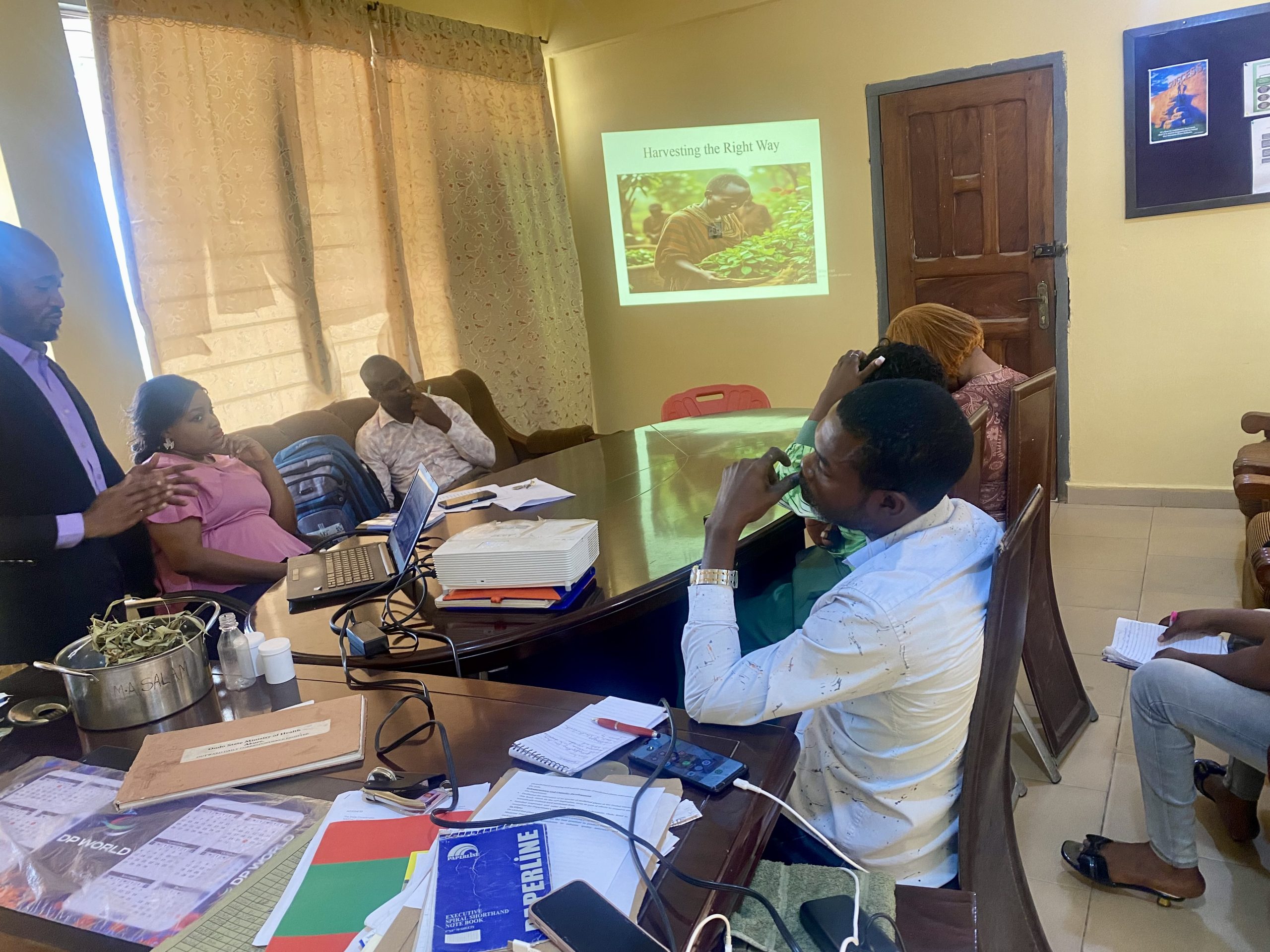
It is on this foundation that I had the honor of facilitating a capacity-building training session on Good Manufacturing Practices (GMP) in Herbal Medicine at the Department of Traditional, Complementary & Alternative Medicine (TCAM), Ondo State Ministry of Health, Akure.
This training was part of the state’s commitment to strengthen the herbal sector and empower practitioners with the knowledge required to produce safe, standardized, and high-quality herbal products.
🌿 Why GMP Matters in Herbal Medicine
Good Manufacturing Practices (GMP) form the backbone of safe herbal production. While most traditional practitioners possess deep generational knowledge of herbs, many are not exposed to the modern frameworks that ensure:
-
Clean and hygienic processing
-
Correct plant identification
-
Standardized formulations
-
Safe packaging and labeling
-
Proper documentation
-
Avoidance of contamination
-
Safe storage and shelf-life control
Without GMP, even the most potent herb can become unsafe or ineffective. During the training, one key point I emphasized was this:
“What heals in the forest must still be safe in the bottle.”
Herbal medicine is powerful, but only when handled correctly.
🏛️ The Role of the TCAM Department in Ondo State
The Department of Traditional, Complementary & Alternative Medicine (TCAM) under the Pharmaceutical Services of the State Ministry of Health has been doing remarkable work in bridging the gap between traditional healing and modern medical standards.
Their goals align with:
-
Promoting safe herbal practices
-
Registering and supporting practitioners
-
Creating guidelines and legal frameworks
-
Encouraging research, documentation, and development
-
Building collaboration between modern health professionals and herbalists
The fact that Ondo State prioritizes this sector shows visionary leadership, a recognition that herbal medicine remains a major pillar of healthcare for the majority of the population.
🎙️ What We Covered in the Training
The training session was hands-on, practical, and deeply engaging. Together with herbal practitioners, we explored essential topics, including:
1. Correct Plant Identification
Using the wrong plant or the wrong species, can turn a remedy into a poison. We discussed simple but reliable methods of confirming plant identity.
2. Good Harvesting Practices
-
When to harvest each plant part
-
Avoiding polluted environments
-
Sustainable harvesting methods
This ensures potency and protects the environment.
3. Drying Herbs Correctly
Direct sunlight destroys active compounds in many herbs. Participants learned proper shade-drying and airflow techniques.
4. Grinding and Milling Practices
Clean tools, stainless equipment, and hygienic surfaces prevent contamination and preserve product quality.
5. Principles of Formulation
How to combine herbs properly
How to measure quantities
How to avoid unnecessary mixtures
Why “everything inside one bottle” is dangerous
6. Clean Water, Tools & Hygiene
We emphasized the importance of:
-
Potable water
-
Clean workspace
-
Proper clothing (gloves, aprons, hair covers)
7. Good Packaging & Labelling Practices
Labels must include:
-
Product name
-
Directions
-
Dosage
-
Batch number
-
Expiry date
-
Precautions
This helps consumers use herbs responsibly.
8. Safe Storage & Shelf-Life
Herbal products degrade quickly when stored wrongly. We covered moisture control, temperature, and shelf-life estimation.
9. Herbal Safety & Toxicity Awareness
Herbs can interact with drugs. Herbs can harm the liver. Herbs can cause miscarriage.
Education is key to preventing tragedies.
10. Building a Professional Herbal Practice
We discussed branding, documentation, customer care, ethics, and why professionalism builds trust.
Overall, the participants were deeply engaged, asking questions, sharing experiences, and demonstrating a strong passion for learning.
🌱 Why This Training Matters for the Future
The growth of herbal medicine in Nigeria is inevitable, with or without regulation.
But growth without guidance leads to:
-
Unsafe processing
-
Toxic mixtures
-
Loss of public trust
-
Difficulty with NAFDAC registration
-
Poor-quality products that cannot enter bigger markets
This training is part of a long-term journey to help practitioners:
✔ produce cleaner and safer remedies
✔ embrace modern standards
✔ open doors to product registration
✔ grow sustainable herbal businesses
✔ protect consumers
✔ preserve indigenous knowledge
🙏 Appreciation
I sincerely appreciate the leadership and staff of the TCAM Department, Ondo State Ministry of Health, for inviting me as a facilitator.
Their openness to collaboration between pharmacists and traditional practitioners is exactly what Nigeria needs to build a strong, trusted herbal medicine ecosystem.
To all the herbal practitioners who attended, your passion, humility, and willingness to learn are admirable. You are the custodians of our heritage. Together, we will continue to improve the quality of herbal practice in the state.
Conclusion
Strengthening herbal medicine is not just a professional duty it is cultural preservation. By combining the wisdom of our ancestors with modern scientific principles, we can create herbal products that are safe, effective, and globally acceptable.
This training is only the beginning.
The future of herbal + modern integration in Ondo State is bright.
And I’m honored to be part of this journey.